🔥 What Makes a Good Briquette: Understanding Ash Content, Burning Time, and the Hidden Quality You Can’t Always See
In the world of charcoal briquettes, not everything is as simple as black and white. At first glance, every briquette looks the same — solid, dark, and compact. But for those of us who’ve been in this business for decades, we know: the real quality isn’t in the look — it’s in the burn.
This article is for two kinds of readers:
— the beginner still asking, “What’s ash content?”, and
— the seasoned expert who already knows what poor combustion smells like in a shipping container.
Let’s dive in from both sides.
🔍 What Is Ash Content, Really?
If you're new to briquettes, here's the simplest way to understand ash content:
Ash content is what’s left behind after the fire is gone.
It’s the fine, greyish powder that settles at the bottom of your grill or stove. The higher the ash content, the more mess you're left with — and the lower the efficiency of the charcoal.
For the beginner, this means:
- More ash = more cleaning
- More ash = more waste
- More ash = less fire-to-weight ratio
For the expert, it’s a direct marker of:
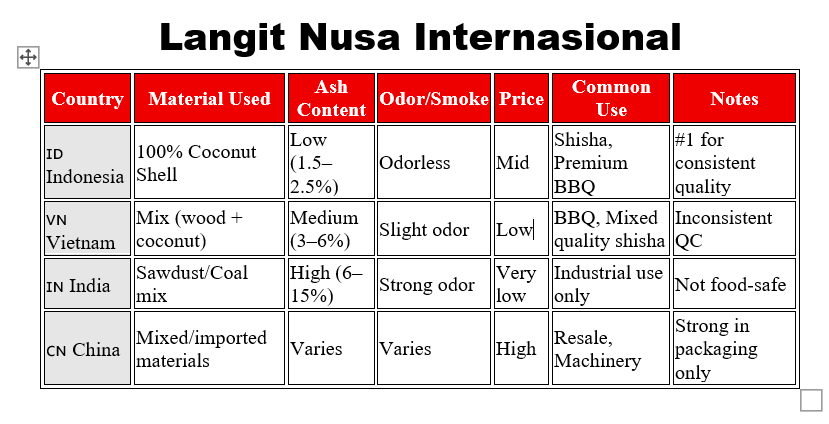
- Material purity (was it 100% coconut shell or did they mix sawdust?)
- Carbonization quality (incomplete burn leads to residue)
- Binders used (cheap binders leave trace ash)
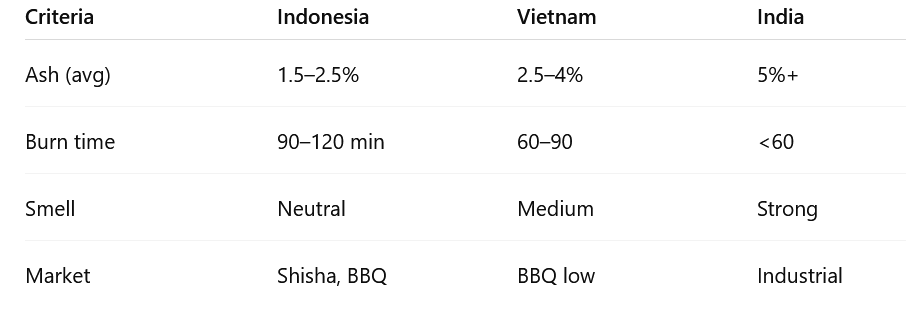
Shisha-grade briquettes should have ash content below 2.5%.
BBQ-grade may range 5%–10%, and anything higher than that should only belong in industrial fuel use.
⏱️ And What About Burning Time?
Burning time is simple in theory — but not always in practice.
It's not just about how long it burns — but how consistently.
A beginner might measure it with a stopwatch. Fair enough. But ask any café owner or seasoned griller, and they'll tell you: a good briquette doesn’t just last long, it holds steady heat throughout.
Low-quality briquettes:
- Burn hot for 15 minutes, then fade
- Flicker, spark, or leave half-burnt pieces
- Require constant replacement
Premium briquettes:
- Burn for 2 to 3 hours straight
- Offer even heat across the grill
- Reduce labor, replacement, and customer complaints
Even heat isn’t something you can see in a photo. But you can feel it — in the consistent sizzle on your meat, or the smooth pull from a shisha pipe.
🌬️ Odor and Taste: The Silent Deal-Breakers
Here’s something many beginners overlook: smell.
You can have a briquette that looks perfect — clean cut, smooth edges, good color — but once you light it, it stinks. Why? Because many factories cut costs with:
- Raw, immature shells
- Cheap, chemical-heavy binders
- Wet or dirty materials
That smell? It clings to your meat. It spoils your shisha. It ends up on your customer’s tongue.
High-grade briquettes — like ours — are made from fully carbonized, aged coconut shell, with no added chemicals. The result is a neutral, clean burn. No taste. No smoke. No spark.
📦 Quality You Can’t Fake: Behind-the-Scenes
Let’s be clear: real quality doesn’t happen on the surface.
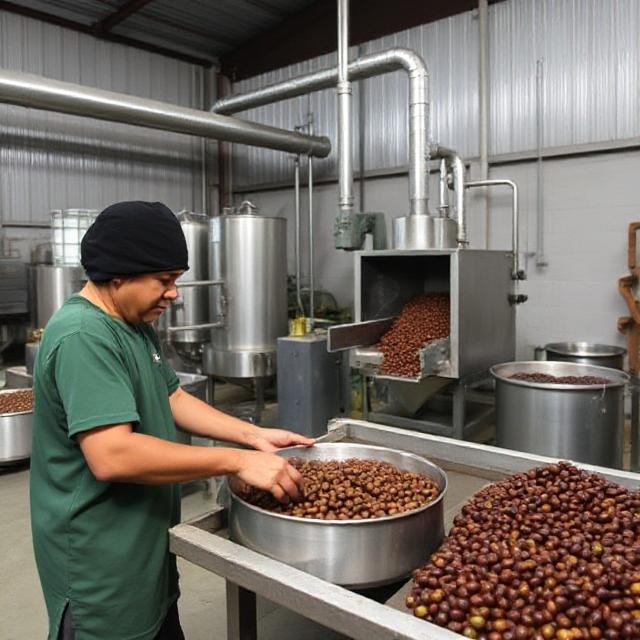
It happens in the factory, in the drying room, in the packaging line.
Here’s what we’ve learned after 50 years in this industry:
- Raw Material: We hand-select coconut shells — not husks, not scrap. Only hard, mature shells.
- Carbonization: Slow-burned at high heat in oxygen-controlled kilns. That’s what gives it structure and purity.
- Binder: 100% natural tapioca flour. No limestone. No additives.
- Moisture Control: Below 5% before pressing. Because moisture = mold = rejection.
- Pressing & Drying: Consistent pressure, 2-stage drying, zero shortcuts.
- Quality Control: Every batch weighed, measured, burned, and broken before shipping.
- Packaging: 5-ply master box, shrink-wrapped, palletized, and container-loaded with real export standards.
🧭 For the Young Buyer: What to Look For (Even If You Can’t Measure)
If you're just starting out, here’s how to judge a good briquette — even if all you have are pictures:
- Surface: Smooth, no cracks = properly dried
- Color: Deep black (not brown) = full carbonization
- Shape: Consistent = good pressing machine
- Ash Test: Burn one. The less powder, the better.
- Odor: Smell it cold and hot. If it stinks, walk away.
- Burn Time: Should last minimum 2 hours for BBQ, more for shisha
- Even Heat: Cook something. See if one side burns faster.
Ask your supplier these questions — not just price per ton.
🎯 For the Expert in the Room: Why Clients Stay With Us
You’ve seen factories rise and fall. You've seen the tricks — like wet charcoal to increase weight, or limestone to fake strength. You’ve heard “shisha grade” thrown around like candy.
But what keeps your clients is consistency, clean documentation, and zero headache.
What we offer isn’t just briquettes. It’s:
- Predictable quality, batch after batch
- Total process control, from shell sourcing to container loading
- 24/7 shipment tracking and direct communication
- Export packaging that doesn’t collapse in transit
- A product that you won’t have to explain or apologize for
Tags
#education